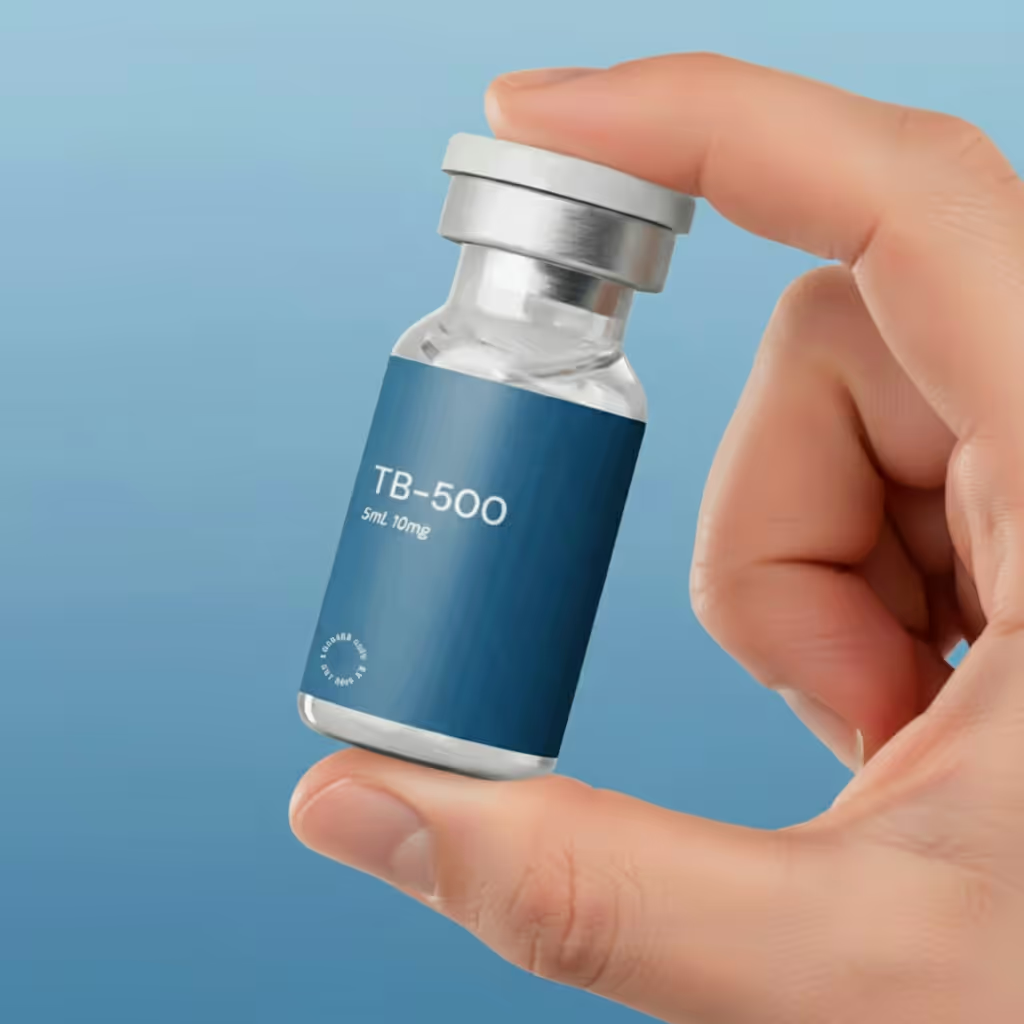
TB-500 for Post-Surgical Tissue Repair and Recovery: Comprehensive Guide to Peptide Therapy and Healing Benefits
A comprehensive guide to TB-500 for post-surgical tissue repair and recovery. Covers what TB-500 is and its relation to Thymosin Beta-4, mechanisms of action (cell migration, angiogenesis, inflammation modulation), healing benefits (faster recovery, improved flexibility, reduced inflammation), potential applications beyond surgery (soft tissue injuries, chronic inflammation, sports injuries), dosing protocols with loading (2–5 mg, 2–3 times/week) and maintenance (1–2 mg, 1–2 times/week) phases, administration methods and injection sites, expected results timeline (1 week to 8–12 weeks), side effects, and safety considerations including FDA status.
- TB-500 is a synthetic peptide derived from Thymosin Beta-4 that promotes tissue repair through cell migration, angiogenesis, and inflammation modulation.
- Key healing benefits for post-surgical patients include faster recovery, improved flexibility, and reduced inflammation.
- Dosing involves a loading phase (2–5 mg, 2–3 times per week) followed by maintenance (1–2 mg, 1–2 times per week).
- Administration is via subcutaneous or intramuscular injection, commonly at the abdomen or thigh.
- Initial pain reduction and mobility improvements may appear within the first week; significant recovery typically at 8–12 weeks.
- Applications extend beyond surgery: soft tissue injuries, chronic inflammation, and sports injuries.
- Common side effects are mild (injection site redness/swelling); rare effects may include allergic reactions.
- TB-500 is not FDA-approved for human use; consult a healthcare provider before starting therapy.
In this article
TB-500, a synthetic version of the naturally occurring peptide Thymosin Beta-4, has gained attention for its potential in post-surgical tissue repair and recovery. This comprehensive guide explores the mechanisms, benefits, and applications of TB-500 in enhancing healing processes. Many individuals undergoing surgery face challenges such as prolonged recovery times and complications related to inflammation. TB-500 offers a promising solution by promoting cellular regeneration and reducing inflammation, thereby facilitating a smoother recovery.
What is TB-500?
TB-500 is a synthetic peptide derived from Thymosin Beta-4, a protein that plays a crucial role in tissue repair and regeneration. It is known for its ability to promote cell migration and angiogenesis, which are essential processes in healing. By enhancing these mechanisms, TB-500 aids in the recovery of damaged tissues, making it particularly beneficial for post-surgical patients. The peptide's unique properties allow it to facilitate faster healing and improve overall recovery outcomes.
In the rapidly evolving world of peptide research, few compounds have generated as much scientific interest as TB-500. This synthetic peptide, derived from the naturally occurring protein Thymosin Beta-4, has captured the attention of researchers worldwide for its remarkable potential in cellular repair and regeneration studies.
Mechanisms of Action
TB-500 operates through several key mechanisms that contribute to its effectiveness in tissue repair:
- Cell Migration Enhancement: TB-500 promotes the movement of cells to the site of injury, which is vital for effective healing.
- Angiogenesis Promotion: The peptide stimulates the formation of new blood vessels, ensuring that the healing tissues receive adequate oxygen and nutrients.
- Inflammation Modulation: TB-500 helps to control inflammation, reducing pain and swelling associated with surgical recovery.
These mechanisms work synergistically to accelerate the healing process, making TB-500 a valuable tool in post-surgical recovery.
TB-500: Modulating Inflammatory Responses
TB-500's potential to modulate inflammatory responses. Investigations suggest that the peptide may reduce the expression of pro-inflammatory
— TB-500: A Synthetic Peptide with Potential in Regenerative and Cellular Research, 2025
Healing Benefits
The healing benefits of TB-500 are significant, particularly for individuals recovering from surgery. Some of the key advantages include:
- Faster Recovery: TB-500 can significantly reduce recovery time by enhancing tissue repair processes.
- Improved Flexibility: The peptide aids in restoring flexibility to the affected areas, which is crucial for regaining full function.
- Reduced Inflammation: By modulating inflammatory responses, TB-500 helps alleviate pain and discomfort during the recovery phase.
Potential Applications
TB-500 has a wide range of potential applications beyond post-surgical recovery, including:
- Soft Tissue Injuries: The peptide can be beneficial in treating various soft tissue injuries, promoting faster healing.
- Chronic Inflammation: TB-500 may help manage chronic inflammatory conditions, providing relief and improving quality of life.
- Sports Injuries: Athletes often use TB-500 to expedite recovery from injuries, allowing them to return to their activities more quickly.
Dosing Protocols
When considering TB-500 for therapeutic use, understanding the dosing protocols is essential. The following guidelines are commonly recommended:
- Loading Phase: Typically involves higher doses administered over a short period to saturate the system.
- Maintenance Phase: After the loading phase, lower doses are used to maintain the benefits of the peptide.
- Administration Frequency: Depending on the specific needs, TB-500 may be administered several times a week during the loading phase, followed by less frequent doses during maintenance.
These protocols can be adjusted based on individual responses and specific recovery goals.
In this article