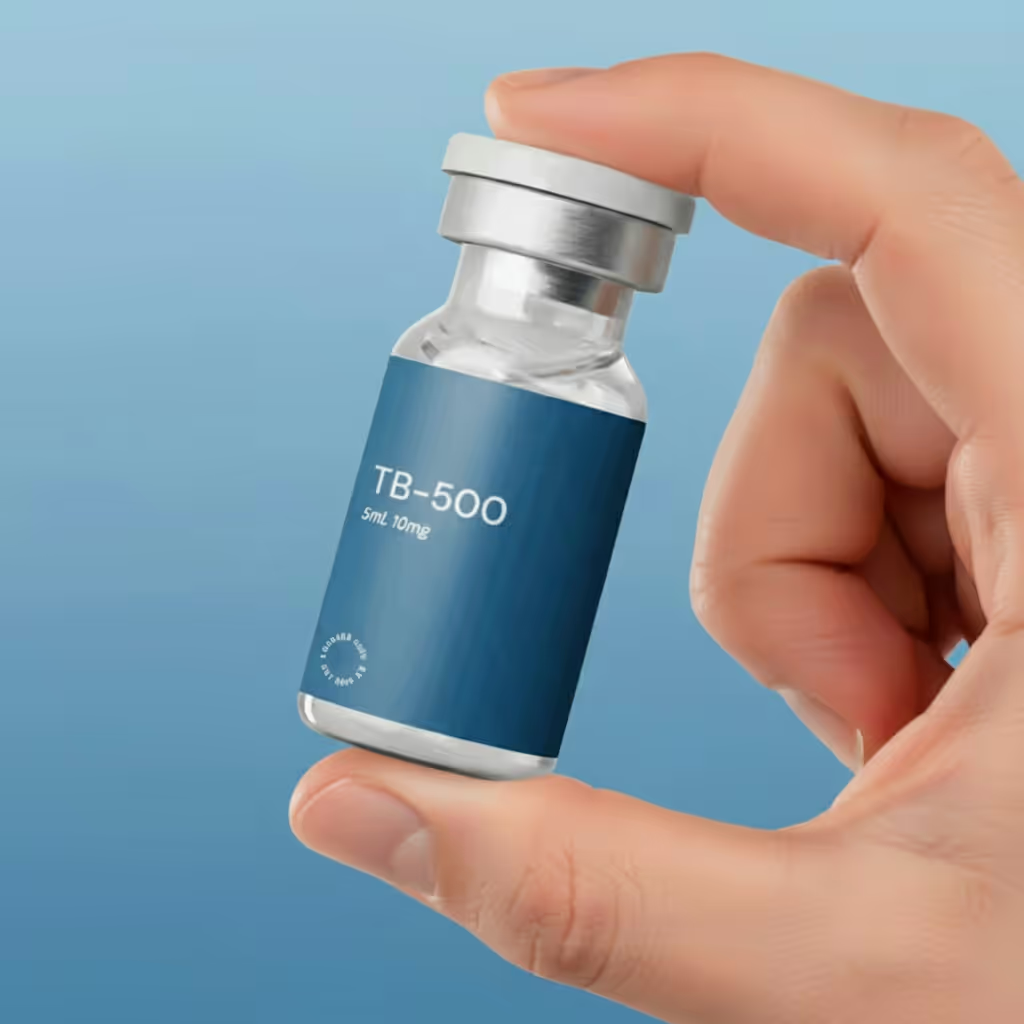
TB500 Peptide Patient Case Studies and Outcomes: Evidence-Based Healing Insights
A guide to TB-500 patient case studies and outcomes with evidence-based healing insights. Covers documented benefits (faster recovery, improved flexibility, enhanced muscle repair), how TB-500 promotes tissue regeneration through actin upregulation, angiogenesis, and inflammation modulation, clinical outcomes including improved mobility and reduced pain, key findings from recent clinical research, trial phase and sample size impact on outcome validity, recommended dosage protocols (2–10 mg/week), how dosage variations impact healing and side effects, common side effects (injection site reactions, fatigue, headaches), and contraindications (active cancer, pregnancy/breastfeeding).
- TB-500 patient case studies document faster recovery from injuries, improved flexibility, and enhanced muscle repair.
- TB-500 promotes tissue regeneration by upregulating actin for cell migration, stimulating angiogenesis, and modulating inflammatory response.
- Clinical outcomes include significant mobility improvements, reduced pain levels, and high patient satisfaction.
- Dosages commonly range from 2–10 mg per week via subcutaneous injection, with loading doses followed by maintenance.
- Higher dosages may produce more pronounced effects but can also increase side effect risk — monitoring is essential.
- Common side effects: injection site reactions (redness, swelling), mild fatigue, and headaches — generally transient.
- Contraindications include active cancer, pregnancy, and breastfeeding due to potential risks.
- Neither TB-4 nor TB-500 are FDA-approved for medical use; published peer-reviewed data remains limited and further research is needed.
In this article
TB500, a synthetic version of thymosin beta 4, has garnered attention for its potential in promoting healing and tissue regeneration. This peptide therapy is particularly relevant for individuals recovering from injuries or surgeries, as it may enhance recovery times and improve overall patient outcomes. In this article, we will explore documented benefits of TB500 through patient case studies, examine clinical trials supporting its efficacy, and discuss dosage protocols and safety considerations.
In the rapidly evolving world of peptide research, few compounds have generated as much scientific interest as TB-500. This synthetic peptide, derived from the naturally occurring protein Thymosin Beta-4, has captured the attention of researchers worldwide for its remarkable potential in cellular repair and regeneration studies.
What Are the Documented Benefits of TB500 Peptide in Patient Case Studies?
TB500 peptide therapy has been associated with several documented benefits in patient case studies, making it a compelling option for those seeking enhanced recovery. Key benefits include faster recovery from injuries, improved flexibility, and enhanced muscle repair. These outcomes are particularly significant for athletes and individuals undergoing rehabilitation.
How Does TB500 Promote Tissue Regeneration and Healing?
TB500 promotes tissue regeneration and healing through several mechanisms. It upregulates actin, which is crucial for cell movement and migration, facilitating the repair process. Additionally, TB500 stimulates angiogenesis, the formation of new blood vessels, which is essential for delivering nutrients and oxygen to healing tissues. Furthermore, it modulates the inflammatory response, reducing excessive inflammation that can hinder recovery.
TB-500's Role in Tissue Regeneration & Angiogenesis
TB-500, a synthetic fragment of thymosin beta-4, is associated in research models with better-supported cell migration, actin cytoskeleton reorganization, angiogenesis, and connective tissue regeneration through increased cellular motility and vascular network formation.
What Clinical Outcomes Have Patients Experienced with TB500 Therapy?
Patients undergoing TB500 therapy have reported various positive clinical outcomes. Many have experienced significant improvements in mobility, allowing them to return to their daily activities more quickly. Additionally, a reduction in pain levels has been frequently noted, contributing to overall patient satisfaction.
Which Clinical Trials Support TB500's Efficacy and Safety?
Clinical trials play a crucial role in validating the efficacy and safety of TB500. Several studies have been conducted to assess its impact on healing and recovery, providing valuable insights into its therapeutic potential.
What Are the Key Findings from Recent TB500 Clinical Research?
Recent clinical research has revealed key findings regarding TB500's efficacy. Studies indicate that TB500 can significantly enhance recovery times in various conditions, including muscle injuries and surgical recoveries. However, comprehensive studies published in peer-reviewed journals are limited, and further research is needed to establish robust safety profiles and efficacy.
TB-500 Clinical Trials & FDA Approval Status
human clinical trials for TB-500 Neither TB4 or TB-500 are FDA approved for medical use.
— TB4 (Thymosin Beta-4) vs TB-500 Peptide Therapy: What's the Difference?
How Do Trial Phases and Sample Sizes Affect TB500 Outcome Validity?
The validity of TB500 outcomes is influenced by trial phases and sample sizes. Larger sample sizes in Phase II and III trials tend to provide more reliable data regarding efficacy and safety. Additionally, the design of these trials, including control groups and randomization, enhances the credibility of the findings.
In this article