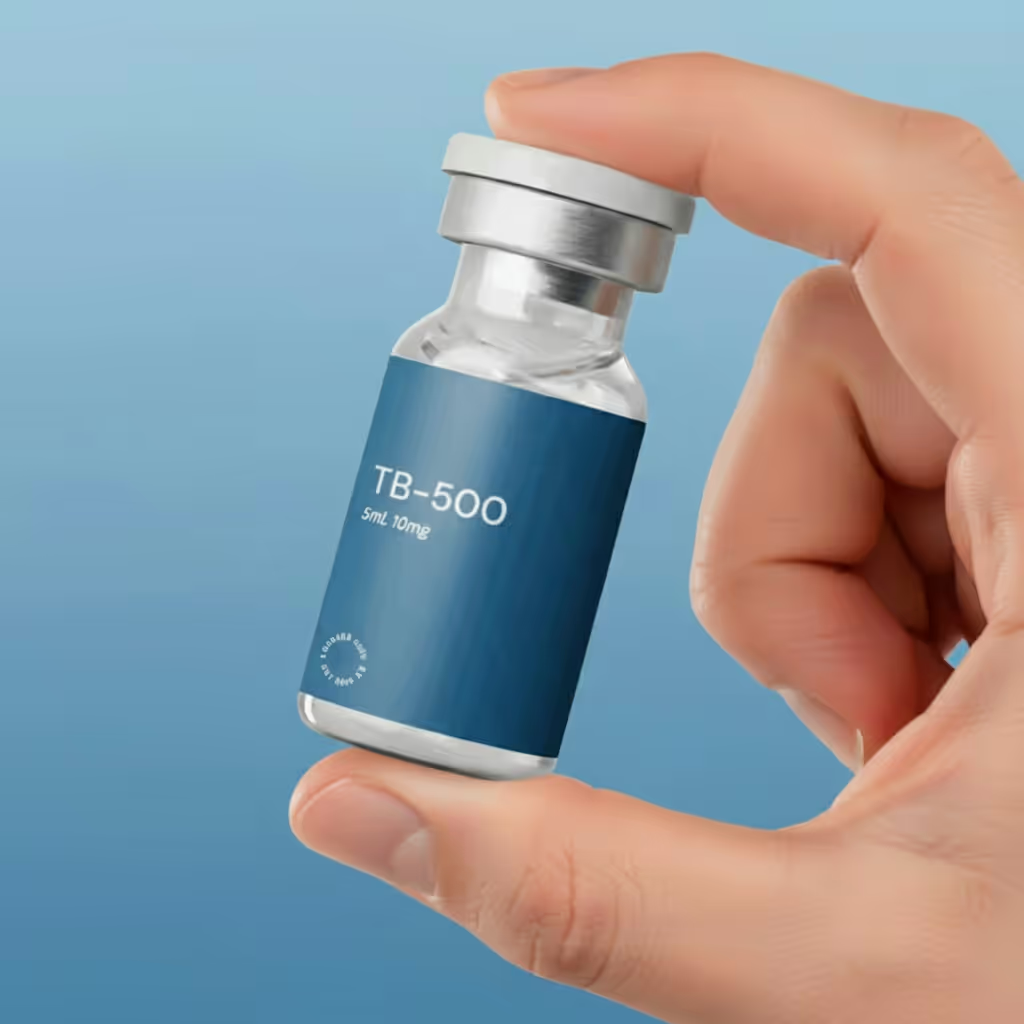
TB-500 Dosage Calculator: Complete Guide to Thymosin Beta-4 Dosing
Calculate your ideal TB-500 dose with our dosing charts, reconstitution guide, and protocols for systemic healing, tissue repair, and injury recovery.
- TB-500 uses a loading/maintenance protocol: 4-10mg weekly for 4-6 weeks (loading), then 2-4mg every 1-2 weeks (maintenance)
- Unlike BPC-157, TB-500 works systemically throughout the body rather than just at the injection site
- Common vial sizes are 5mg and 10mg, reconstituted with bacteriostatic water
- TB-500 is prohibited by WADA for competitive athletes
- Often stacked with BPC-157 for complementary localized + systemic healing effects
In this article
What Is TB-500?
TB-500 is a synthetic peptide derived from Thymosin Beta-4 (Tβ4), a naturally occurring protein found in nearly all human and animal cells. While the full Thymosin Beta-4 protein contains 43 amino acids, TB-500 specifically contains the active region responsible for its healing properties—the sequence that binds to actin and promotes cell migration.
First identified in 1981 after being isolated from bovine thymus gland, Thymosin Beta-4 plays critical roles in tissue repair, inflammation control, and cellular regeneration. TB-500 was developed to harness these healing properties in a more stable, therapeutic form.
The peptide works through several mechanisms. It regulates actin, a protein essential for cell structure and movement, which allows cells to migrate more effectively to injury sites. TB-500 also promotes angiogenesis (new blood vessel formation), ensuring oxygen and nutrients reach damaged tissues for faster recovery. Additionally, it modulates inflammation by suppressing pro-inflammatory cytokines like TNF-α and IL-6.
What sets TB-500 apart from localized peptides like BPC-157 is its systemic distribution. Once injected, TB-500 travels throughout the bloodstream and activates healing mechanisms body-wide. This makes it particularly useful for generalized pain, bilateral injuries, or situations where the precise injury location is difficult to target.
TB-500 is currently classified as a research peptide and is not FDA-approved for human therapeutic use. It is also prohibited by WADA (World Anti-Doping Agency) under the S2 classification for peptide hormones and growth factors. Anyone subject to drug testing should avoid TB-500 entirely.
TB-500 Research Applications
Research has investigated TB-500 and Thymosin Beta-4 across multiple therapeutic areas:
Clinical research includes Phase II trials for dry eye treatment showing improved tear production and reduced discomfort, as well as pilot studies in heart attack patients suggesting improved cardiac function following treatment. Animal studies have demonstrated accelerated wound healing, with some research showing functional recovery beginning as early as 6 hours post-injury.
TB-500 Dosing Protocols
TB-500 dosing follows a two-phase approach: a loading phase with higher, more frequent doses to build tissue levels, followed by a maintenance phase with reduced dosing to sustain benefits.
Loading Phase Dosing
The loading phase typically lasts 4-6 weeks with doses ranging from 4-10mg per week, usually divided into 2-3 injections:
Maintenance Phase Dosing
After the loading phase, most protocols transition to maintenance dosing of 2-4mg administered once every 1-2 weeks:
Dosing by Goal
Your specific therapeutic goal may influence the dosing approach:
Body Weight Considerations
While TB-500 dosing is less weight-dependent than some peptides due to its systemic distribution, body weight can still inform starting doses:
How to Reconstitute TB-500
TB-500 comes as a lyophilized (freeze-dried) powder that must be reconstituted with bacteriostatic water before injection. The concentration you create depends on how much bacteriostatic water you add:
Step-by-Step Reconstitution
- Gather your supplies: TB-500 vial, bacteriostatic water, alcohol swabs, and insulin syringes
- Clean the rubber stoppers on both vials with alcohol swabs and let dry completely
- Draw your desired amount of bacteriostatic water into an insulin syringe
- Insert the needle into the TB-500 vial at an angle, aiming the stream at the glass wall—not directly at the powder
- Allow the water to slowly run down the side of the vial; never shake or agitate
- Let the vial sit for several minutes until the powder fully dissolves; gentle swirling is acceptable if needed
- Label the vial with the date, concentration, and contents
The goal is to create a concentration that allows for convenient measuring. Most users prefer concentrations that result in injection volumes between 0.1ml and 0.5ml (10-50 units on an insulin syringe).
Calculating Your TB-500 Dose
Once reconstituted, use this formula to determine how much solution to draw:
Units to draw = (Desired dose in mcg ÷ Concentration in mcg/ml) × 100
For example, with a 10mg vial reconstituted with 2ml of bacteriostatic water (5mg/ml = 5,000mcg/ml):
- For a 2.5mg (2,500mcg) dose: (2,500 ÷ 5,000) × 100 = 50 units
Dose Calculations for 5mg Vial
Dose Calculations for 10mg Vial
Quick Reference Dosing Charts
These charts show exactly how many units to draw for common doses:
5mg Vial Quick Reference
10mg Vial Quick Reference
How Many Doses Per Vial?
Planning your supply requirements helps ensure uninterrupted treatment:
Storage Guidelines
Proper storage maintains TB-500's stability and effectiveness:
Lyophilized (unreconstituted) powder:
- Refrigerator (2-8°C / 36-46°F): Stable for up to 2 years
- Freezer (-20°C / -4°F): Stable for up to 3 years
- Protect from light and moisture
Reconstituted solution:
- Refrigerator only: 2-8°C (36-46°F)
- Use within 28 days when reconstituted with bacteriostatic water
- Never freeze reconstituted solution—freezing can denature the peptide
- Keep away from light
- Allow vials to reach room temperature before opening to reduce condensation
Unlike some peptides, TB-500 is relatively stable once reconstituted, giving you a comfortable 4-week window to use each vial.
Injection Technique
TB-500 can be administered via subcutaneous (SubQ) or intramuscular (IM) injection. Due to its systemic properties, most users prefer subcutaneous injection—TB-500 distributes throughout the body regardless of injection location.
Subcutaneous Injection
Recommended sites: Abdomen (at least 2 inches from navel), outer thigh, back of upper arm, or love handle area
Technique:
- Clean the injection site with an alcohol swab and let dry
- Pinch a fold of skin between thumb and forefinger
- Insert the needle at a 45-90 degree angle
- Inject slowly and steadily
- Wait a few seconds before withdrawing to prevent backflow
- Apply gentle pressure; do not rub
Intramuscular Injection
Some users prefer IM injection near an injury site for perceived localized benefit, though research suggests TB-500's systemic nature makes injection location less critical than with BPC-157.
Common IM sites: Deltoid, vastus lateralis (outer thigh), or gluteus
Injection Frequency and Timing
- Loading phase: 2-3 injections per week, evenly spaced (e.g., Monday/Thursday or Monday/Wednesday/Friday)
- Maintenance phase: 1-2 injections per week or every other week
- Timing: No specific time of day is required; consistency matters more than timing
- Site rotation: Rotate injection sites systematically to prevent lipohypertrophy and local irritation
TB-500 Treatment Timeline
Understanding what to expect helps set realistic expectations:
Weeks 1-2: Initial Phase
- Some users report reduced inflammation and improved comfort
- Minimal visible healing progress yet
- Possible temporary fatigue as the body responds to systemic healing signals
Weeks 3-6: Loading Phase Progress
- Noticeable improvements in pain, mobility, and inflammation
- Accelerated healing becomes apparent
- Reduced swelling and stiffness in affected areas
- Many users report significant improvement by week 4
Weeks 6-12: Maintenance and Consolidation
- Continue healing trajectory with reduced dosing
- Transition to maintenance protocol
- Sustained improvements with less frequent administration
Beyond 12 Weeks
- Some protocols continue maintenance dosing for chronic conditions
- Others cycle off and repeat as needed
- Evaluate progress and adjust protocol with healthcare provider
Stacking TB-500 with Other Peptides
TB-500 is frequently combined with other healing peptides for synergistic effects:
TB-500 + BPC-157: The Classic Healing Stack
The most popular combination pairs TB-500's systemic healing with BPC-157's localized repair. This complementary approach addresses injuries from multiple angles.
Combined protocol example:
- TB-500: 2.5mg twice weekly (5mg/week during loading)
- BPC-157: 250-500mcg daily near the injury site
- Duration: 4-6 weeks loading, then maintenance
This stack is particularly effective for athletes recovering from injuries, post-surgical patients, and those with chronic soft tissue conditions.
TB-500 vs BPC-157: Key Differences
Understanding how these peptides differ helps determine which might suit your needs:
Choose TB-500 when:
- You have systemic or widespread inflammation
- The injury location is unclear or involves multiple sites
- You need whole-body recovery support
- You're addressing cardiovascular tissue support
Choose BPC-157 when:
- You have a specific, localized injury
- Gut health is a primary concern
- You prefer more frequent, lower-volume dosing
- You want to target tendons, ligaments, or specific joints
Consider both when:
- You want comprehensive healing from multiple mechanisms
- You're recovering from surgery or significant trauma
- You have both localized injury and systemic inflammation
In this article