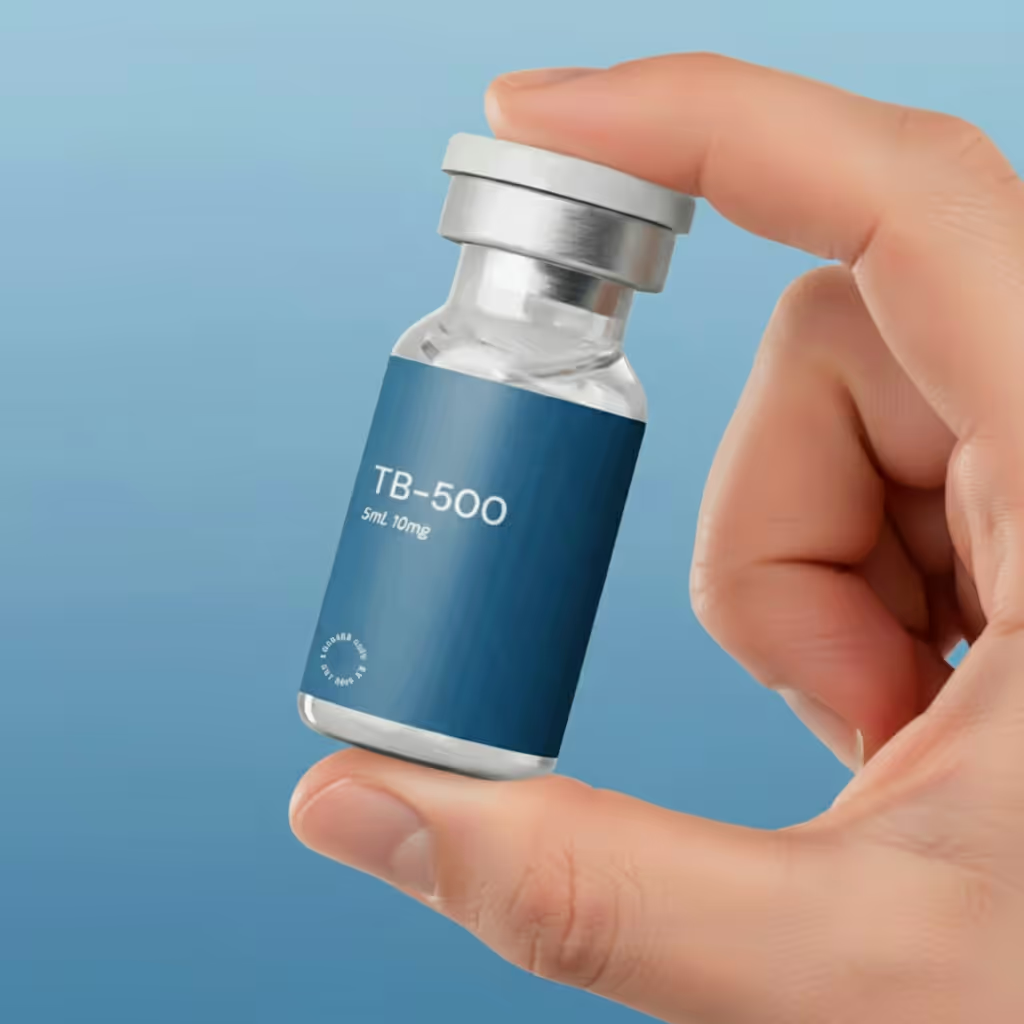
TB-500 Peptide for Anti-Aging and Tissue Regeneration: Understanding Benefits and Mechanisms
A guide to TB-500 peptide for anti-aging and tissue regeneration. Covers key benefits (faster recovery, improved flexibility, reduced inflammation), mechanisms of action (actin regulation, angiogenesis, immune modulation), potential applications (soft tissue injuries, wound healing, cardiac health), administration and dosing protocols (loading 2–5 mg/week for 4–6 weeks, maintenance 2–3 mg every 2–4 weeks), side effects (injection site reactions, fatigue, headaches), anti-aging and longevity implications, how TB-500 reduces chronic inflammation to support aging, and safety and legal considerations.
- TB-500 is a synthetic peptide derived from thymosin beta-4 with promising applications in anti-aging and tissue regeneration.
- Key benefits include faster recovery from injuries (high impact), improved flexibility through muscle repair (medium impact), and reduced inflammation via immune modulation (high impact).
- Primary mechanisms: actin regulation for cell migration, angiogenesis for nutrient/oxygen delivery, and inflammation modulation for optimal healing.
- Therapeutic applications span soft tissue injuries, wound healing, and emerging cardiac health protection.
- Dosing protocol: loading phase at 2–5 mg/week for 4–6 weeks, then maintenance at 2–3 mg every 2–4 weeks via subcutaneous injection.
- TB-500's ability to reduce chronic inflammation may contribute to longevity by protecting tissues from age-related damage.
- Common side effects are mild: injection site reactions, transient fatigue, and occasional headaches.
- Legal for research purposes in many regions; therapeutic use varies by local regulation — consult a healthcare professional and source from reputable suppliers.
In this article
TB-500, a synthetic peptide derived from thymosin beta-4, has gained attention for its potential in anti-aging and tissue regeneration. This article delves into the benefits, mechanisms of action, and applications of TB-500, providing insights into how it may enhance recovery and promote longevity. As individuals seek effective solutions for age-related decline and injury recovery, TB-500 emerges as a promising candidate.
In the rapidly evolving world of peptide research, few compounds have generated as much scientific interest as TB-500. This synthetic peptide, derived from the naturally occurring protein Thymosin Beta-4, has captured the attention of researchers worldwide for its remarkable potential in cellular repair and regeneration studies.
Benefits of TB-500
TB-500 offers several key benefits that contribute to its popularity in the realm of anti-aging and tissue regeneration.
- Faster Recovery from Injuries: TB-500 accelerates the healing process by promoting cell migration and tissue repair, making it particularly beneficial for athletes and those recovering from injuries.
- Improved Flexibility: The peptide enhances flexibility by reducing inflammation and promoting muscle repair, which can lead to better overall mobility.
- Reduced Inflammation: TB-500 modulates the immune response, helping to decrease inflammation and pain associated with various conditions.
Mechanisms of Action
TB-500 operates through several biological mechanisms that contribute to its regenerative properties.
The peptide primarily functions by regulating actin, a protein crucial for cell movement and structure. This regulation facilitates cell migration, which is vital for tissue repair and regeneration. Additionally, TB-500 promotes angiogenesis, the formation of new blood vessels, which enhances nutrient delivery to damaged tissues. Furthermore, it modulates inflammation, reducing the body's inflammatory response and promoting a more favorable environment for healing.
Actin Regulation
The primary molecular mechanism is the regulation of Actin, a protein essential for cell structure and movement, which is crucial for tissue repair and regeneration. Angiogenesis Promotion: TB-500 stimulates the growth of new blood vessels, ensuring better nutrient and oxygen supply to damaged areas, accelerating healing.
TB-500, a synthetic fragment of thymosin beta-4, is associated in research models with better-supported cell migration, actin cytoskeleton reorganization, angiogenesis, and connective tissue regeneration through increased cellular motility and vascular network formation.
Potential Applications
The therapeutic applications of TB-500 are diverse, making it a valuable tool in regenerative medicine.
- Soft Tissue Injuries: TB-500 is commonly used to treat soft tissue injuries, such as strains and sprains, by accelerating recovery and reducing downtime.
- Wound Healing: The peptide's ability to promote cell migration and angiogenesis makes it effective in enhancing wound healing processes.
- Cardiac Health: Emerging research suggests that TB-500 may have protective effects on cardiac tissue, potentially aiding recovery after heart-related events.
In this article